DeepSeek V4.1 Flash: The Unknown
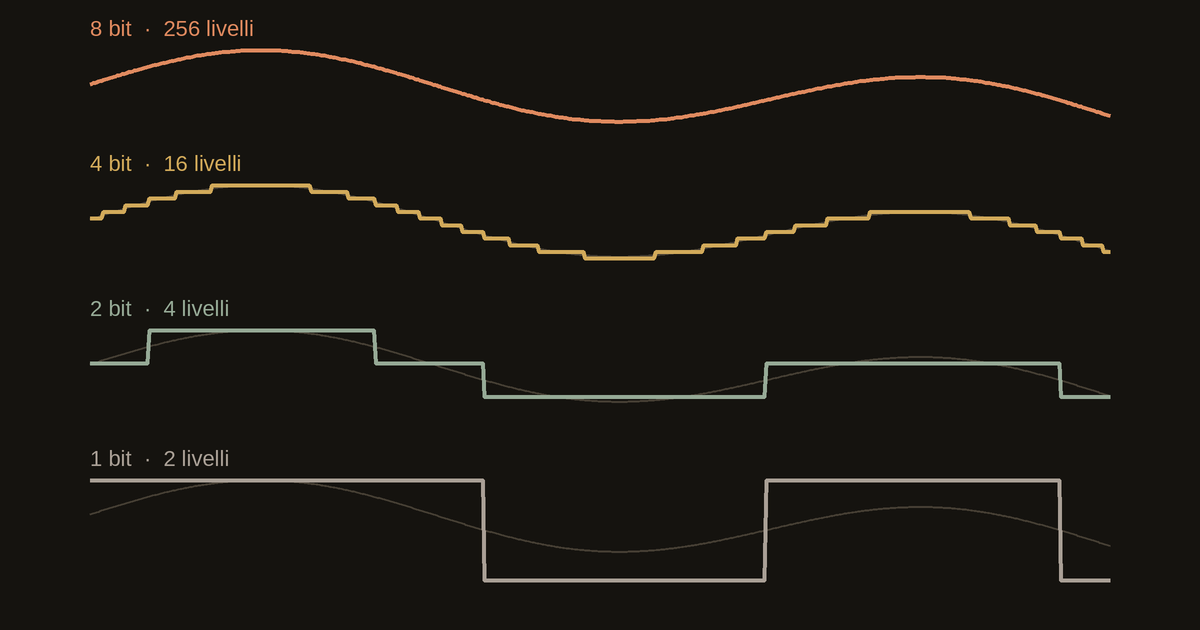
The Quantization
Quantization is the process of compressing a model’s weights to reduce its size, and the choice between 8-bit and 1-bit is a classic trade-off between quality and hardware accessibility. For DeepSeek V4.1 Flash, the difference is substantial and goes beyond mere space savings.
Here is a detailed analysis of the three aspects you raised.
📉 What Is Lost (and Gained) When Moving from 8-bit to 1-bit
The loss of quality is not linear: it goes from an almost imperceptible compression to a significant degradation, but with an enormous gain in terms of hardware requirements.
8-bit Quantization (Q8)
- Quality: Considered almost “lossless”. The 8-bit representation can faithfully capture both small and large values, handling “outlier weights” and the model layers most sensitive to precision well. The output is typically indistinguishable from that of the original full-precision model (FP16). The increase in perplexity (an error indicator) is usually less than 1%.
- What is gained: The maximum possible quality outside the original model, but with a disk footprint for DeepSeek V4.1 Flash of about 508 GB.
1-bit Quantization (Q1)
- Quality: The degradation is stark. 1-bit precision is inherently limited and leads to a substantial loss of reasoning ability and accuracy. In tests on other models, accuracy can collapse dramatically (for example, from 84% to 48% on specific tasks). However, for DeepSeek V4.1 Flash, the more advanced 1-bit versions (such as
UD-IQ1_M) manage to maintain a top-1 agreement of 88.2% with the original model—a remarkable result for such extreme compression. - What is gained: A model that, although “watered down” in its capabilities, becomes extremely accessible. The footprint drops to about 250 GB, making it possible to run on consumer hardware.
In short, with 1-bit you lose the subtlety and precision of the original model in exchange for the ability to run it. With 8-bit, you pay in disk space to get quality practically identical to the original.
💻 Hardware Required to Load the Model
The hardware requirements vary enormously depending on the chosen quantization. The following table summarises the minimum memory (RAM + VRAM) required for the different versions of DeepSeek V4.1 Flash, according to Unsloth’s guide.
Quantization | Minimum memory required (RAM + VRAM)
- 1-bit | 128 – 145 GB
- 2-bit | 176 – 205 GB
- 3-bit | 256 – 290 GB
- 4-bit | 305 GB
- 8-bit | 315 GB
Practical Hardware Considerations
- Configurations for 1-bit: The 1-bit version is designed to run on systems with 128 GB of RAM, such as a high-end MacBook, an NVIDIA DGX Spark, or an RTX Spark. There is even a project demonstrating execution on a Mac mini M1 with only 16 GB of unified memory, although with very low performance.
- Configurations for 4-bit and 8-bit: For a realistic service with 4-bit quantization, 4 to 8 80 GB-class GPUs (such as A100s) are required. An alternative is a workstation with at least 512 GB of system RAM and one or two GPUs, which can keep the weights in RAM and dynamically transfer the “expert layers” to the GPU when needed.
🧠 Running It Without VRAM, Using Only RAM?
Yes, it is absolutely possible, and it is in fact one of the key design features of DeepSeek V4.1 Flash. The model is designed to be able to run on CPU, relying on system RAM and even SSD streaming.
- CPU execution: There are implementations (such as
colibri) that allow the full model (510 GB on disk) to be run on a machine with only a CPU, reading the “expert” weights directly from the SSD. - Role of the Engram tables: A substantial part of the model (the “Engram” tables) can be kept on the SSD and loaded on demand into the operating system cache, saving precious RAM. Alternatively, it can be forced to remain on the CPU.
- Performance: It is important to be aware of the trade-off. CPU execution is much slower than using a GPU. Measured data shows speeds on the order of 1 token per second (or less) on CPU-only configurations. Therefore, it is a perfectly functional solution for testing, development, or personal use without time pressure, but not for a service requiring fast response times.
💎 Summary
The choice of quantization for DeepSeek V4.1 Flash is an exercise in balance:
- 8-bit offers near-original quality but requires a significant hardware investment (over 300 GB of memory and, realistically, one or more GPUs).
- 1-bit sacrifices part of the model’s finesse but makes it accessible on consumer hardware (128 GB of RAM), allowing it to run even on CPU and with SSD support.
If your goal is maximum quality and you have the resources, aim high. If, instead, you want to experiment, develop, or run the model locally on a powerful but not extreme machine, 1-bit or 2-bit quantization is the main path.